Baseline protocol
Zero-knowledge proofs so companies can verify shared supply chain workflows on Ethereum without revealing their data. Built with EY and Microsoft, run as an OASIS project.
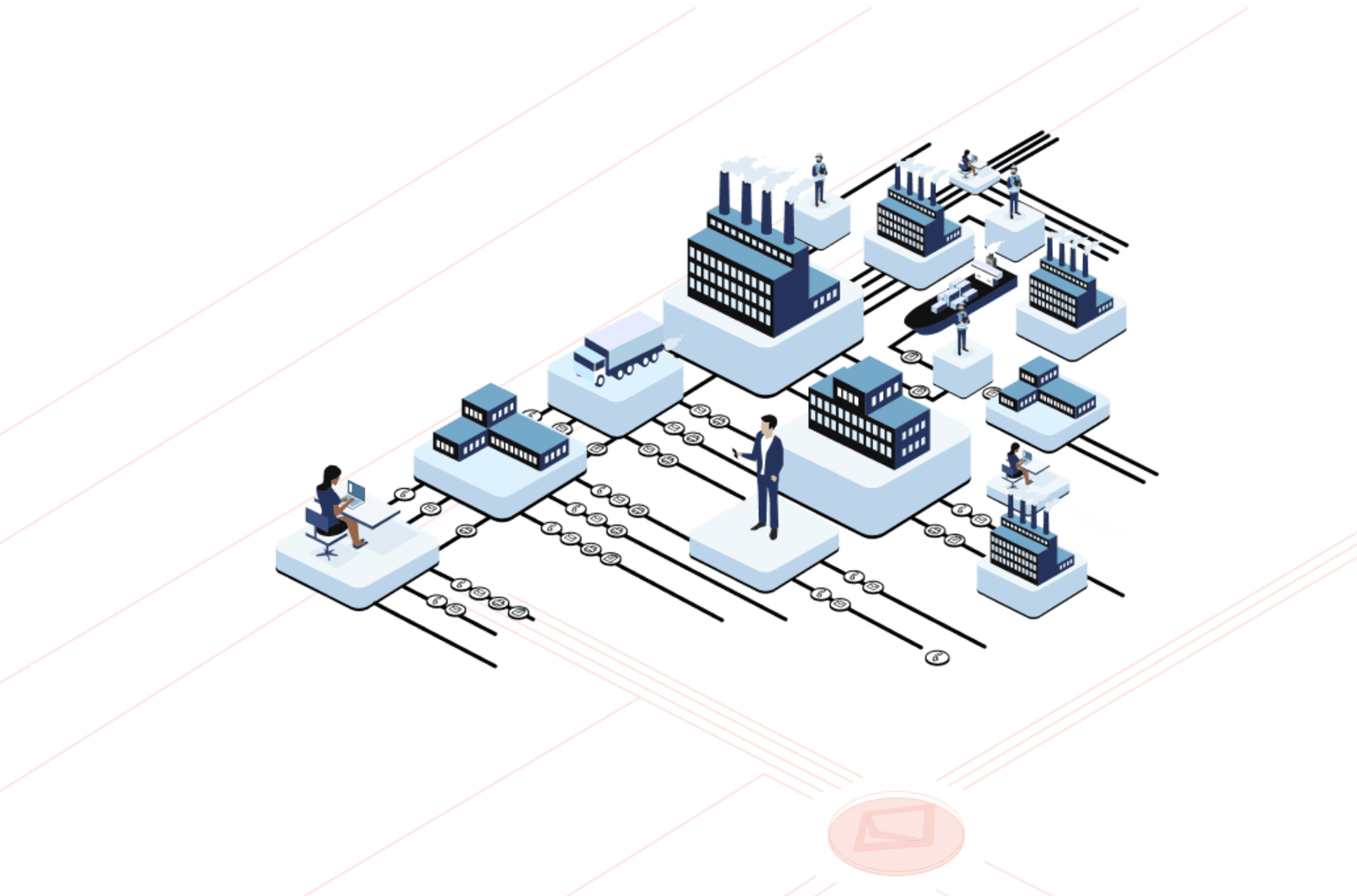
The problem: big companies want to coordinate with suppliers and customers, but nobody is putting purchase orders on a public blockchain. Baseline used the Ethereum mainnet as a shared, tamper-proof reference point while every company kept its actual data in its own systems, with zero-knowledge proofs letting two parties prove they agree on a workflow step without either revealing what's in it.
I was the technical lead from the ConsenSys side, working with designers, developers, and cryptography experts from Microsoft and EY. Together we built the first zero-knowledge-proof-based decentralized protocol for verifying complex, multi-party supply chain workflows. It launched in March 2020 as an OASIS open source project, backed by the Enterprise Ethereum Alliance, and I stayed on as a core maintainer and technical steering committee member.
This is the work I'm proudest of from the R&D years: very smart people, genuinely advanced cryptography, and a real enterprise problem underneath it.
Background
Big companies want to coordinate with their suppliers and customers, but nobody wants to put their purchase orders on a public blockchain. Baseline was the answer to that: use the Ethereum mainnet as a shared, tamper-proof reference point while keeping every company's actual data inside its own systems of record. Zero-knowledge proofs let two parties prove they agree on a workflow step without either of them revealing what's in it.
EY, ConsenSys, and Microsoft announced the initiative in March 2020, and it launched as an OASIS open source project a couple of weeks later, backed by the Enterprise Ethereum Alliance.
What I did
I was the technical lead from the ConsenSys side, working alongside designers, developers, and cryptography experts from Microsoft and EY. Together we designed and built the first zero-knowledge-proof-based decentralized protocol for verifying complex, multi-party supply chain workflows. Getting three companies' engineers to agree on a reference implementation is a project in itself.
After launch I stayed on as a core maintainer and a member of the technical steering committee, helping guide the project and grow the community around it. The specification went on to become an OASIS standard track document.
Things I learned
- "Boring is the new exciting" turned out to be the right pitch. Enterprises don't want magic; they want their existing ERP to keep working.
- ZK circuits are only half the problem. The messaging and coordination layer around them is where most of the engineering lives.
- Open governance is slow on purpose, and that's fine.
More at baseline-protocol.org.